When we think about period pain, we blame hormones.
We hear about prostaglandins, inflammation, and contractions, and while those are absolutely part of the picture, they’re not the whole picture.
Because there’s something else playing a major role that often gets overlooked:
Your muscles.
What’s Actually Happening During Period Pain?
During menstruation, the uterus contracts to help shed its lining. These contractions are influenced by prostaglandins, compounds that increase inflammation and pain sensitivity.
Research shows that people with higher prostaglandin levels often experience more intense cramps. That’s why anti-inflammatory medications can help.
But here’s where things get interesting:
Pain doesn’t just stay in the uterus.
Pain changes how your entire body responds, especially your muscles.
Pain → Tension → Less Oxygen → More Pain
When your body experiences pain, your nervous system responds protectively.
One of the most immediate responses?
Muscle tension.
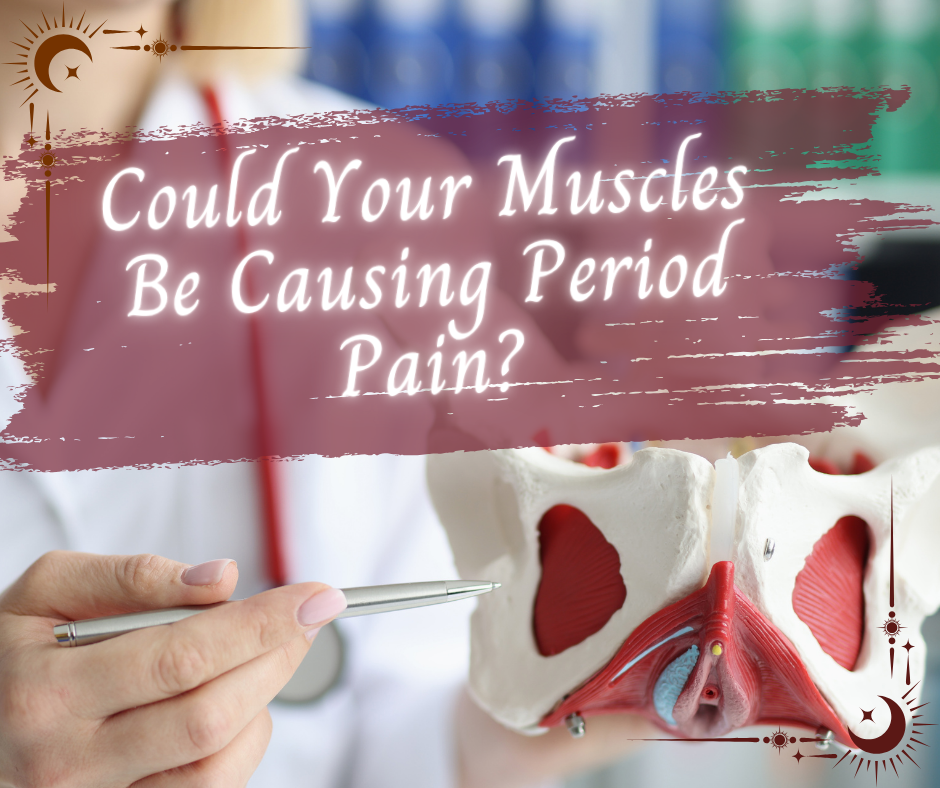
This includes the muscles of your abdomen, hips, and, most importantly... your pelvic floor.
When muscles stay contracted for too long, they can create what’s called:
Hypoxic tissue (low oxygen supply)
This matters because:
Oxygen is essential for healthy tissue function
Reduced circulation = slower removal of inflammatory byproducts
Pain-sensitive chemicals build up in the area
This creates a feedback loop:
Pain → muscle tightening → reduced blood flow → increased inflammation → more pain
Why the Pelvic Floor Matters More Than You Think
Your pelvic floor isn’t just sitting there passively.
It plays an active role in:
Supporting pelvic organs
Assisting circulation and lymphatic flow
Coordinating with your breath and diaphragm
Allowing tissues to move and glide smoothly
When these muscles are overly tight or poorly coordinated:
Blood flow can become restricted
Movement between tissues becomes limited
Friction and irritation increase
And yes, this can intensify menstrual discomfort.
A Surprising Statistic
Up to 90% of menstruating individuals experience period pain at some point
Studies suggest that musculoskeletal factors, including pelvic floor dysfunction, are often underdiagnosed contributors
Even more compelling: Pelvic floor physical therapy has been shown to significantly reduce chronic pelvic pain, including menstrual-related discomfort.
Why This Changes Everything
Hormones are not something you can immediately control.
But your muscles?
They’re accessible. Trainable. Responsive.
That means:
You can begin improving circulation today
You can reduce tension patterns today
You can support your body in real time
What Actually Helps? (Backed by Pelvic Health Research)
Evidence-informed approaches include:
1. Gentle Pelvic Floor Relaxation (Not Just Strengthening) Most people think “Kegels”, but many people with pain actually need relaxation, not more contraction.
2. Breathwork (Diaphragm + Pelvic Floor Connection) The diaphragm and pelvic floor move together. Improving this relationship enhances circulation and reduces tension.
3. Movement-Based Therapies
Yoga therapy
Somatic movement
Gentle mobility work
These help restore fluid movement between tissues and reduce stiffness.
4. Manual Therapy / Massage therapists use external techniques to improve tissue mobility and blood flow. Physical therapist can even do internal work or you can be supported and educated on how to do your own internal massage( which is my preferred recommended way and even personal way of doing internal work)
The Takeaway
Yes, your hormones play a role in period pain.
But they are not the only factor.
Your muscles, especially the muscles around your pelvis, can either amplify pain… or help relieve it.
And the most empowering part?
They’re something you can work with.