Last week, I shared a bit about my journey into holistic health. This week, I want to go a little deeper into one question I get often:
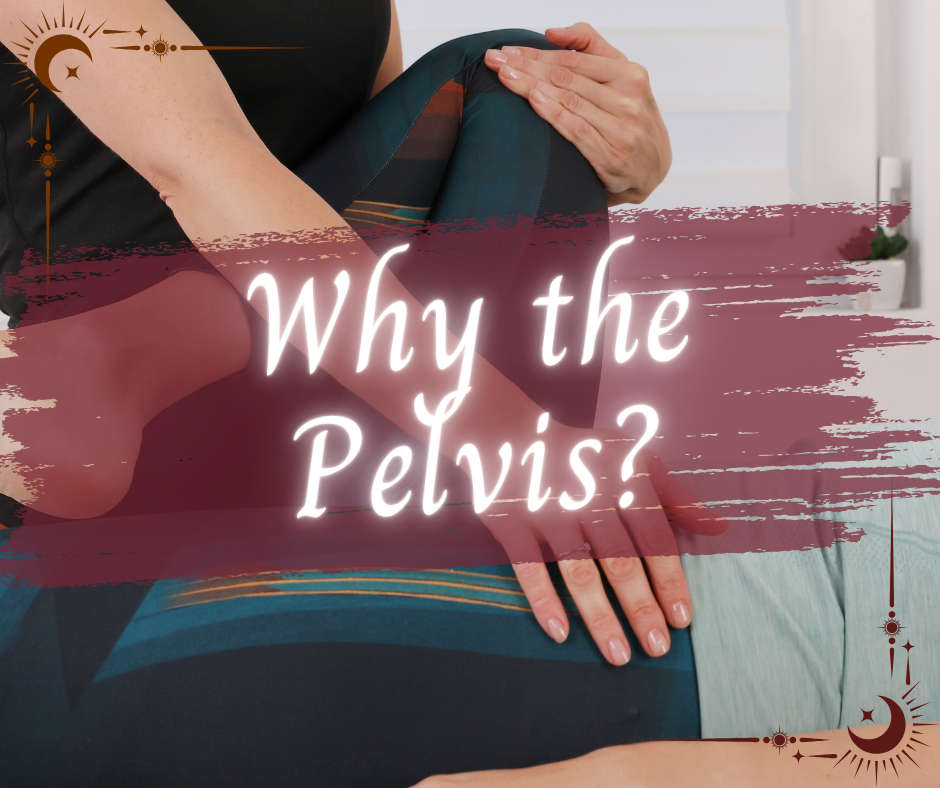
Why the pelvis?
And why I lean more into work around the female pelvis.
I mentioned last week how the Introduction to the Female Pelvis workshop got started, but my journey with the pelvis began long before that.
When I first started studying massage therapy, I was lucky enough to study on Maui, one of the Hawaiian Islands. This quickly exposed me to traditional Hawaiian techniques in bodywork, but even more than that, I had some phenomenal teachers in my foundational training.
I also had the chance to take additional classes under some incredible instructors, including my first Lomi teacher, Jeana Naluai, who talked about how the hips are the keystone of the body.
So much of the tradition I studied focused on the hips, opening them, mobilizing them, and understanding how much of a difference that can make in the body as a whole. I even had the privilege to study directly under her teacher, the legendary Makala Yates.
From there, I was pretty hooked.
I’m not sure how many massages you’ve had, or from how many different therapists, but if you’ve had a massage from me, you know I spend a good amount of time on the hips.
And if you’ve had a lot of other massages, you might have noticed that many therapists tend to steer away from this area.
Which is unfortunate.
One of my other teachers in massage school used to say that this is such an important part of the body and that’s exactly why she had us working on it from day one of technique class. She wanted to make sure we were never uncomfortable, and that we understood we are practitioners of health and wellness, here to support the body in its entirety.
And this is a powerful place to begin.
As I started branching out into movement practices like yoga, I kept hearing more about the hips, not just physically, but emotionally.
How we “hold” things there.
How muscles like the psoas are sometimes called the muscles of the soul.
I became really interested in how movement could create release, not just in the muscles, but sometimes in the emotional body as well.
This was something I was constantly hungry to learn more about.
Anytime there was a continuing education class on the pelvis, pelvic floor, hips, hip flexors, I was in. I still am, I just took a class on the big toe and how it affects our pelvic floor.
And the more complex it became, the more interesting it was to me.
Learning about the differences between the male and female pelvis, not just in bone structure, but in what the pelvis holds. The presence of additional organs, and how that changes the musculature, the pressure systems, and the way we move.
There is so much you can learn about this part of the body. Honestly, even speaking about it in broad strokes could take weeks.
But one of the things I realized as I continued studying, and then started sharing this information with other women, is that it doesn’t actually take that much to start making a difference.
We don’t need to know every anatomical name, every nerve, every blood vessel to begin understanding our bodies and supporting them in a meaningful way.
And that’s one of my favorite parts of this work.
Getting to share space with women.
Talking about what is normal, what isn’t, and why.
Watching the pieces start to fall into place.
Seeing those little lightbulb moments happen.
And then hearing back days, weeks, or months later, how something shifted.
How their lives improved.
How they felt more equipped in their bodies and even language to communicate their own Curiosities or concerns to doctors.
Even hearing from women years later, moving through pregnancy or birth, feeling more prepared because of something they learned, sometimes from just a single workshop.
That’s why I’m in love with the pelvis.
It’s complex. There’s so much to learn, so much to discover.
But at the same time, it often only takes a little bit of understanding to create a really meaningful shift in your life.
If you’re starting to get curious about your own body, your own patterns, or things you’ve been experiencing that never quite made sense
This is exactly the kind of work I love to share.
Whether through workshops, classes, or one-on-one sessions, there are ways to begin understanding and supporting your body that don’t require overwhelm, just a willingness to start.