
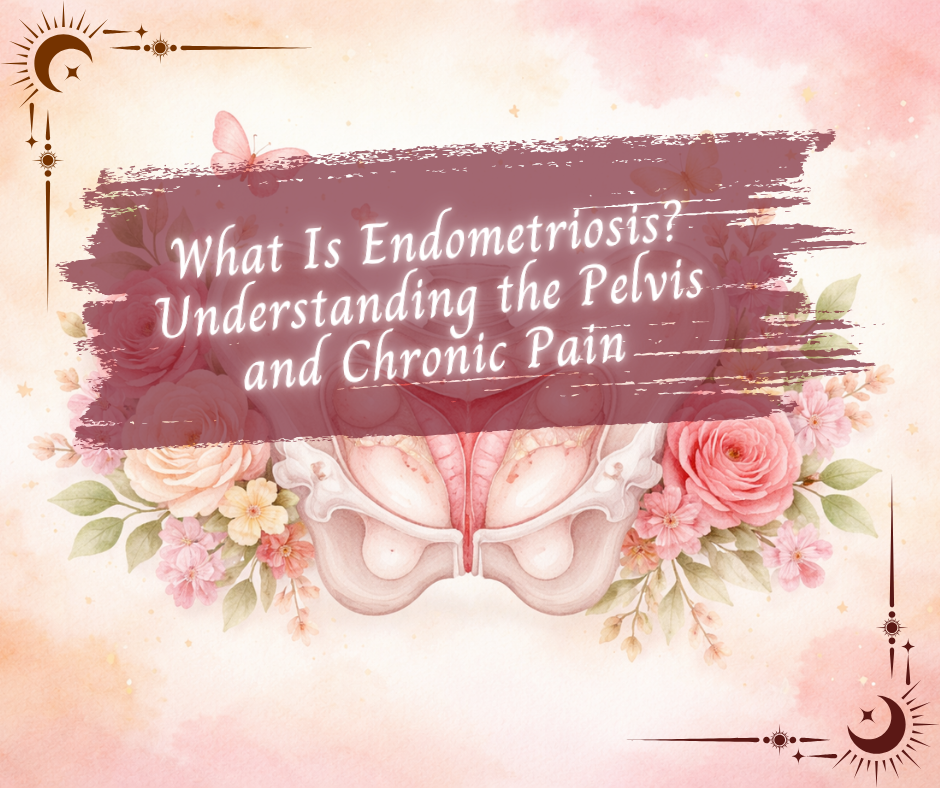
Endometriosis affects approximately 1 in 10 women worldwide.
Yet many people living with the condition spend years searching for answers before receiving a diagnosis.
Painful periods.
Deep pelvic pain.
Digestive discomfort.
Fatigue that feels impossible to explain.
Despite how common it is, many women are never taught what endometriosis actually is or how it affects the body.
Understanding the pelvis is one of the first steps toward supporting it more compassionately.
What Is Endometriosis?
Endometriosis is a condition where tissue similar to the lining of the uterus grows outside the uterus.
This tissue can grow on structures such as:
• ovaries
• uteran tubes
• the pelvic wall
• ligaments that support the uterus
• the bladder or bowel
Just like the uterine lining, this tissue responds to hormonal cycles.
It can thicken, break down, and create inflammation, which contributes to pain.
Why Does Endometriosis Cause Pain?
The pain of endometriosis can come from several sources.
Inflammation in the pelvis can irritate surrounding tissues and nerves.
Scar tissue (adhesions) may develop, which can limit normal movement of organs and tissues.
Over time, the nervous system can also become more sensitive to pain signals, a process known as pain sensitization.
This is why endometriosis pain can feel complex and sometimes unpredictable.
How Endometriosis Affects the Pelvic Muscles
When the body experiences chronic pain, muscles often respond by becoming protective.
The pelvic floor muscles may tighten or guard the area in response to inflammation or discomfort.
This is not the body “malfunctioning.” It is the body trying to protect itself.
However, prolonged tension in these muscles can sometimes contribute to additional discomfort or feelings of pressure in the pelvis.
Why Understanding the Pelvis Matters
Many women navigating endometriosis are told what treatments are available but are rarely taught how their pelvis actually works.
Learning about the structures of the pelvis; bones, muscles, organs, and connective tissue; can help us develop a more compassionate relationship with the body.
When we understand the pelvis better, we can begin supporting the body through:
• gentle movement
• breath awareness
• nervous system regulation
• and informed self-care
Living with endometriosis can feel overwhelming, especially when the body feels unpredictable or painful.
But education can be incredibly empowering.
Understanding what is happening inside the pelvis does not erase the condition, but it can help us respond to the body with more awareness and support.
When we understand the pelvis better, we can begin supporting the body more compassionately.
If you're interested in learning more about pelvic health, movement, and understanding the female body, you can subscribe to receive weekly education and practices.
Next week I’ll be sharing how gentle movement and yoga can support the body when living with endometriosis.